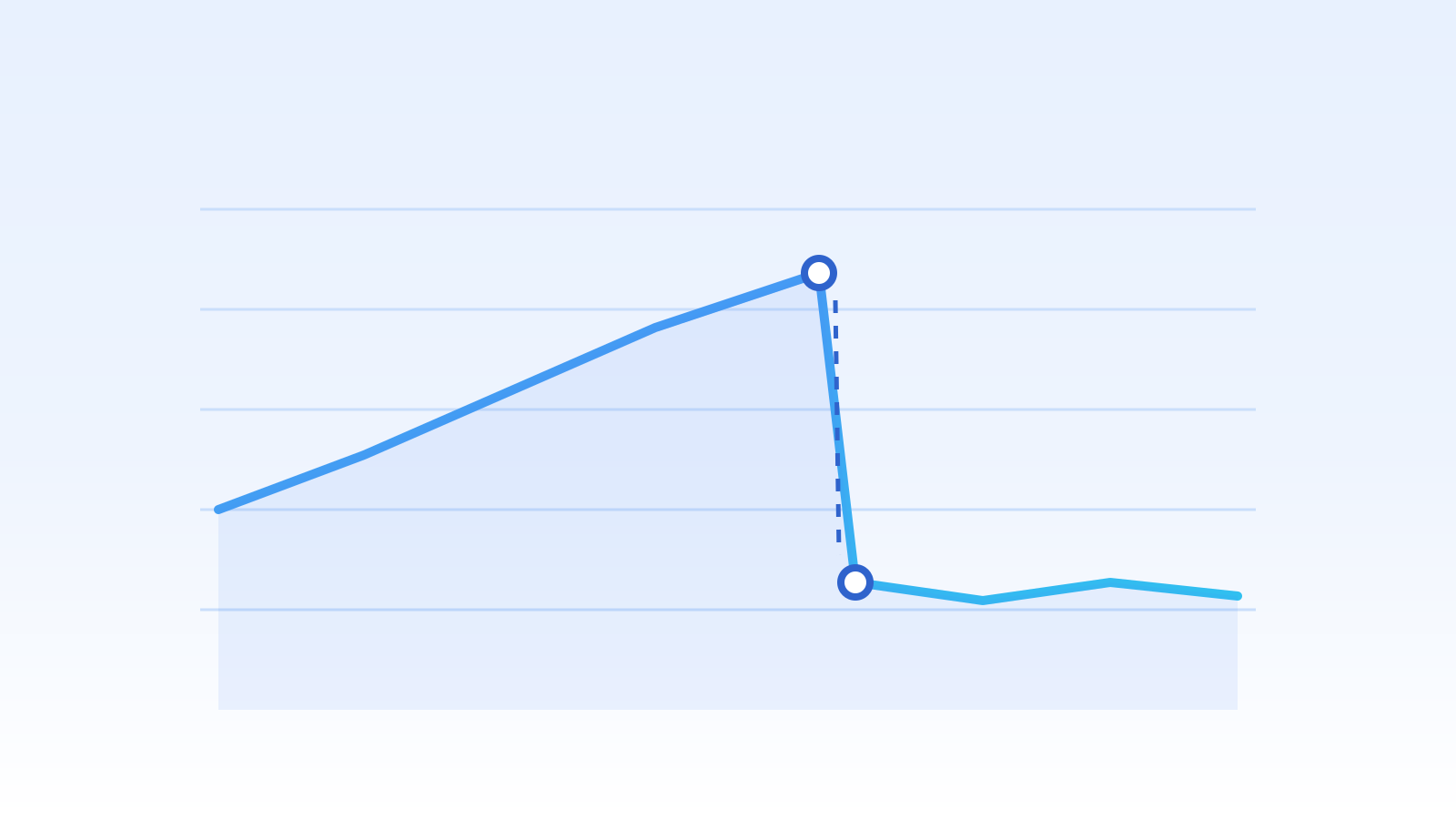
How the X Algorithm Actually Ranks Posts in 2026
A plain-English walkthrough of how X builds the For You timeline: where candidate posts come from, what the ranking model scores, and the filters that run after scoring.
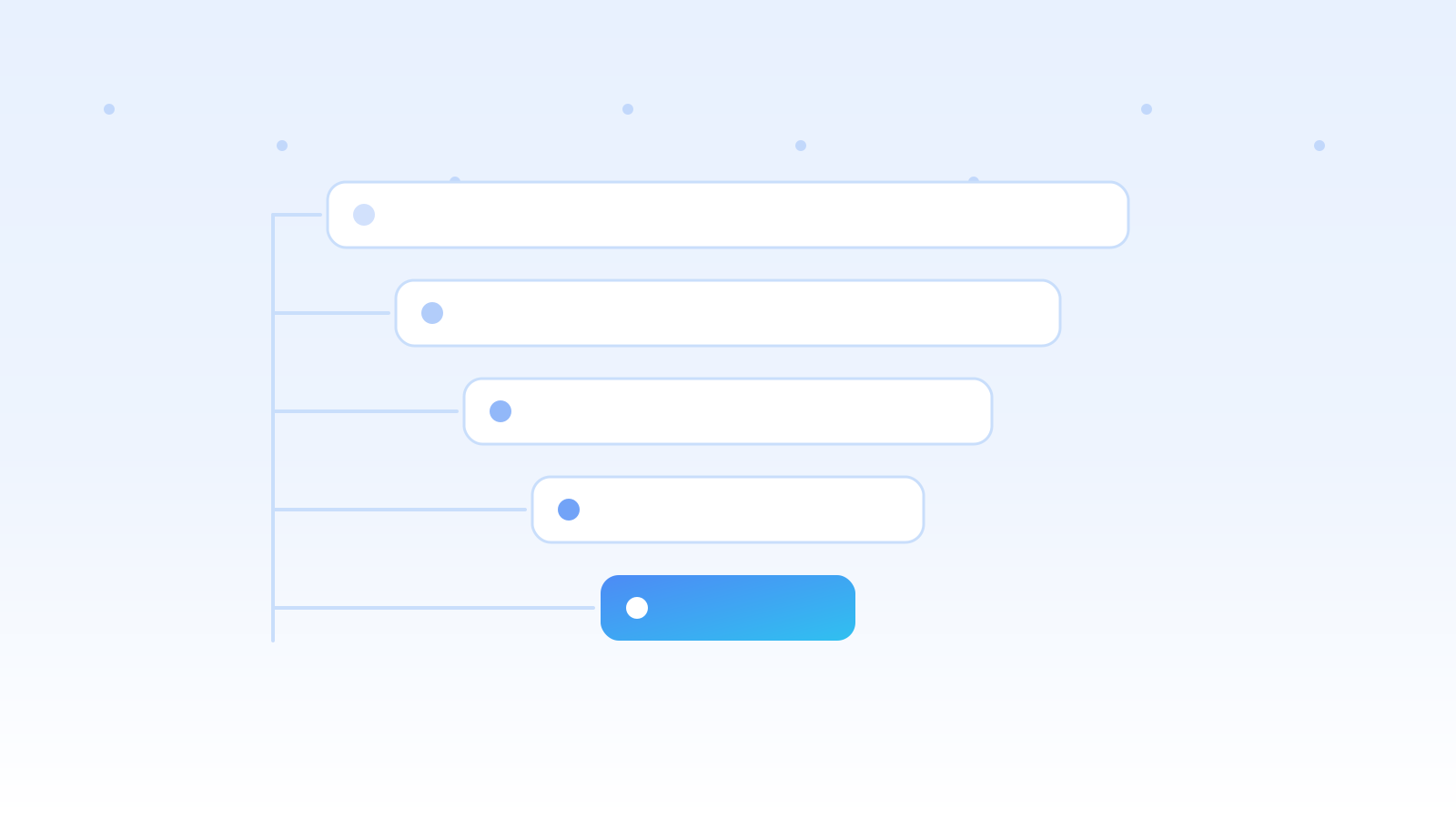
The X timeline is not one algorithm. It is a pipeline. Posts are gathered from several sources, scored by a model that has learned what you personally tend to engage with, and then run through a set of filters that can quietly drop a post after it has already scored well. Most advice about beating the algorithm fails because it treats all three stages as one thing.
X open-sourced the core of its recommendation code in March 2023 and has published engineering notes about the For You timeline since. That, plus what is visible in any account's own analytics, is the most reliable public picture available. Everything below is written as how the system is understood to work — the exact weights are tuned constantly and nobody outside X can see today's values.
Stage one: where candidate posts come from
Before anything is ranked, X assembles a pool of candidates. In its own write-up when the code was published, the platform described narrowing hundreds of millions of posts down to roughly 1,500 candidates per timeline build, drawn from two pools that at the time were described as close to an even split.
- In-network. Recent posts from accounts you follow, ranked partly by how strong your relationship with that account looks — how often you reply to them, open their profile, or linger on their posts.
- Out-of-network. Posts from accounts you do not follow, found two ways: by looking at what people with similar engagement patterns to yours have engaged with, and by matching the post's content to topics and communities you already interact with.
This is the first place reach dies, and it is invisible in your analytics. If your post never enters the candidate pool for anyone outside your followers, no amount of quality gets it seen. Out-of-network sourcing leans on signals of who your account is for — consistent topic, consistent audience, a follower base that behaves like a real community.
Stage two: the model scores every candidate
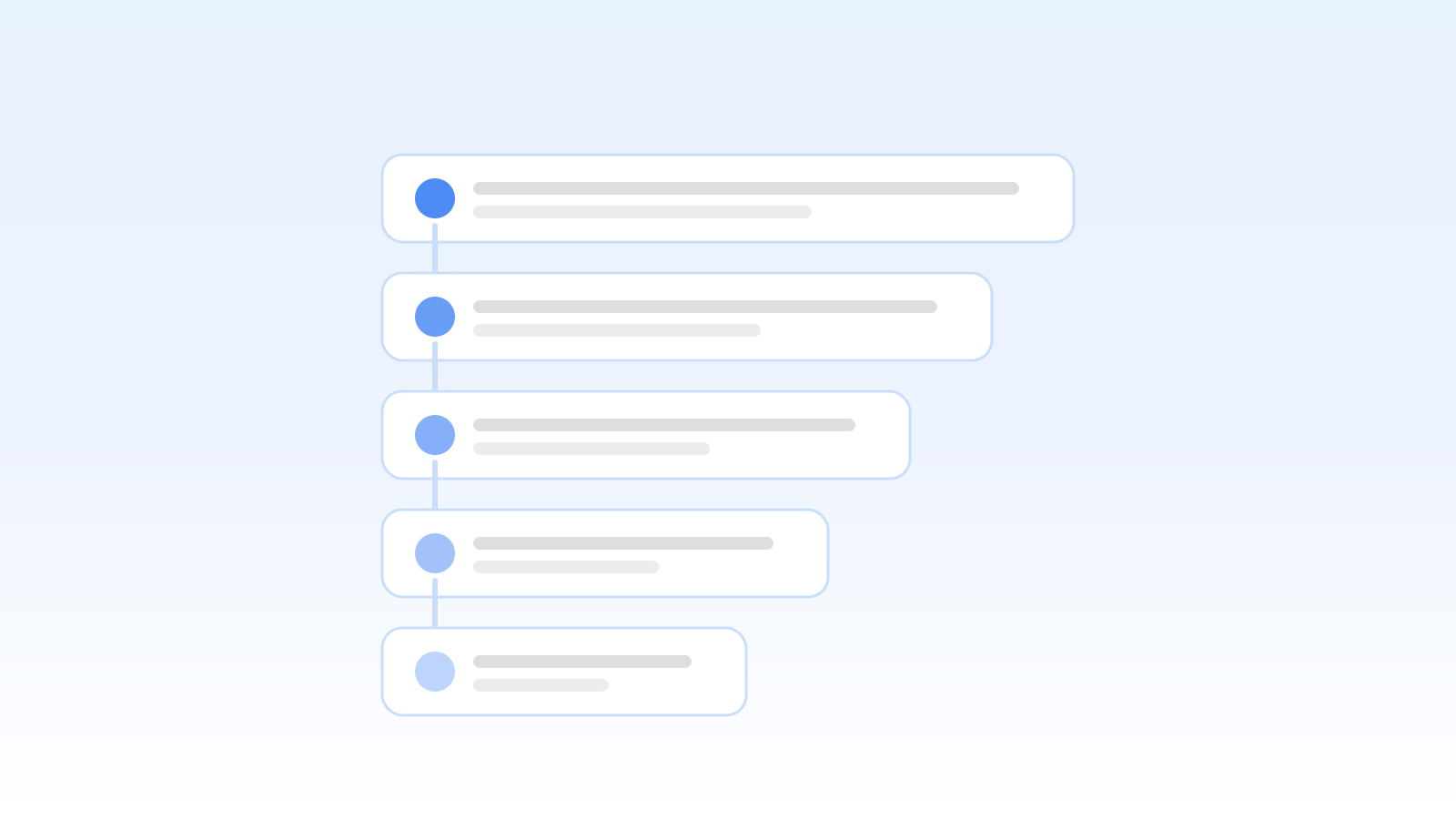
The candidates are then scored by a ranking model that predicts, for each post and each viewer, the probability of several different outcomes — a like, a repost, a reply, a profile visit, a long dwell, and on the other side a mute, a block or a report. Those probabilities are combined into a single number, and the timeline is that number sorted.
The ordering of those weights is the useful part, and it has been broadly consistent since the code was published:
- A reply is worth far more than a like — an order of magnitude more, not a few percent.
- A reply that the author then answers is worth more again. Conversation is the single strongest positive signal in the stack.
- A repost sits above a like but well below a reply.
- A profile click followed by an engagement is heavily rewarded, because it is evidence the post made someone want more from that account.
- Dwell time — how long a post held the screen — counts, which is why long-form posts and multi-image posts often outperform a one-liner with the same idea in it.
- Negative feedback is the heaviest weight of all, and it is negative. A report or a not-interested tap costs more than a large number of likes earns.
Stage three: the filters that run after scoring
A well-scored post can still be removed or demoted before it reaches a feed. These heuristics run last and they explain a lot of otherwise baffling reach:
- Author diversity. Consecutive posts from the same account are pushed apart, so posting six times in ten minutes mostly competes with itself.
- Feedback fatigue. If a viewer has recently given negative feedback on an author, that author is shown to them less for a while.
- Deduplication. Posts you have already seen are filtered out, which is why a post's second day almost never matches its first.
- Policy visibility. Content that trips a policy classifier can be restricted in the recommendation surfaces without the account being actioned at all — the post simply stops being distributed.
What this changes about what you post
Once the pipeline is clear, the tactics fall out of it rather than out of folklore.
- Write posts that are answerable. Not a question tacked onto the end — a claim specific enough that someone with experience will want to correct or extend it.
- Answer your replies. You are the only person who can generate the highest-weighted signal in the system, and it takes ten minutes.
- Give the post somewhere to dwell. A second paragraph, an image worth reading, a thread. Screen time is measured and a one-liner has none.
- Post less, but into a consistent topic. Out-of-network sourcing is topic-matched; an account that posts about four unrelated things is harder to place.
- Never chase engagement you would not want. Reply-bait attracts the exact audience most likely to mute you, and that costs more than the likes were worth.
- Check the first thirty minutes. Early engagement decides whether a post gets a wider candidate pass. If nothing lands early, the post is usually over.
The model is not deciding whether your post is good. It is predicting what a specific person will do in the next few seconds. Write for that prediction and the reach follows.
The bottom line
There is no single lever. Reach is the product of getting sourced, scoring well, and surviving the filters, and each of the three fails in a different way. If your posts reach followers but never strangers, you have a sourcing problem. If they reach strangers who do not engage, you have a scoring problem. And if reach falls off a cliff overnight with no change in what you post, start with the filters — that is what the impressions drop guide is for.